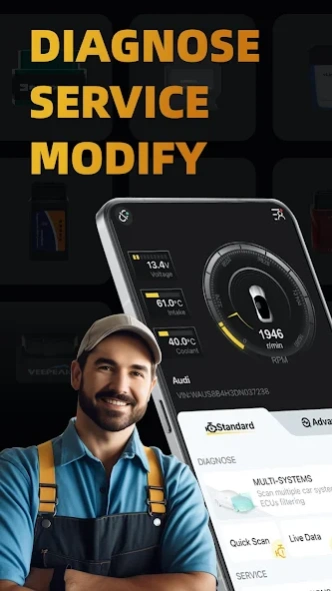
You know that sinking feeling. The check engine light pops on, and your brain immediately goes to worst-case scenarios. Is it a loose gas cap? Or is your transmission about to explode? For years, DIY owners had two choices: ignore it and hope for the best, or drop a few hundred bucks at a shop just for a diagnosis. Honestly, neither option feels great.
But here’s the deal — things have changed. AI-powered car diagnostic tools are here. And they’re not just fancy code readers. They’re like having a veteran mechanic sitting in your passenger seat, whispering what’s wrong. Let’s dive into what these tools actually do, why they matter for DIY owners, and how you can pick the right one without getting overwhelmed.
What Exactly Are AI-Powered Car Diagnostic Tools?
Well, traditional OBD2 scanners just pull error codes. You get a string of letters and numbers — P0301, P0420 — and then you Google it like a madman. AI tools take that raw data and interpret it in real time. They analyze patterns, compare your car’s behavior to millions of data points, and then spit out plain English explanations.
Some even predict failures before they happen. Imagine your car telling you, “Hey, your oxygen sensor is getting sluggish — you’ve got about 200 miles before it fails.” That’s not science fiction. That’s machine learning applied to your engine bay.
How They Work (Without the Tech Jargon)
Think of it like this: a standard scanner is a thermometer. It tells you the temperature. An AI scanner is a meteorologist — it looks at the pressure, humidity, wind patterns, and says, “It’s gonna rain in two hours.” The AI tool cross-references live sensor data with known failure modes, weather conditions, driving habits, and even your car’s service history. It’s pattern recognition on steroids.
You plug it in, open an app, and suddenly you’re not guessing anymore. You’re diagnosing.
Why DIY Owners Are Falling in Love with These Tools
Let’s be real — not everyone wants to become a full-blown mechanic. Most of us just want to save money and avoid getting ripped off. AI diagnostic tools hit that sweet spot. They give you confidence without requiring a decade of experience.
Here are some of the biggest wins I’ve seen from fellow DIYers:
- No more wild goose chases — The AI tells you which sensor is failing, not just which system is affected. That saves hours of swapping parts.
- Cost transparency — Some tools estimate repair costs based on your location and car model. You’ll know if a fix is a $20 part or a $500 job before you start.
- Live data visualization — Instead of staring at numbers, you see graphs and gauges. It’s like a fitness tracker for your car.
- Cloud-based updates — The tool gets smarter over time. New failure patterns are added regularly, so your diagnostic ability grows with it.
Sure, there’s a learning curve. But it’s way gentler than learning to rebuild a transmission.
Top AI Diagnostic Tools Worth Your Money (2025 Edition)
I’ve tested a handful of these gadgets over the last year. Some are brilliant. Some are… well, overhyped. Here’s a quick comparison of the ones that actually deliver for DIY owners.
| Tool Name | Key AI Feature | Price Range | Best For |
|---|---|---|---|
| BlueDriver Pro | Real-time failure prediction | $100 – $150 | Everyday drivers |
| FIXD Advanced | Plain-English explanations | $60 – $90 | Beginners |
| Autel MaxiCOM MK908 | AI-guided repair steps | $400 – $600 | Advanced DIYers |
| Launch X431 V+ | Cloud-based pattern matching | $300 – $500 | Multi-car households |
| ThinkCar AI-Box | Voice-activated diagnostics | $80 – $120 | Tech enthusiasts |
Notice the price range? You don’t need to spend a fortune. The FIXD Advanced is a fantastic entry point — it literally translates “P0171” into “Your engine is running too lean, likely a vacuum leak or dirty MAF sensor.” That’s gold for a beginner.
What to Look for When Shopping
Not all AI tools are created equal. Here’s what I’d prioritize:
- App quality — A clunky app ruins the experience. Look for clean UI, fast loading, and regular updates.
- Vehicle coverage — Some tools are great for American cars but struggle with European or Asian models. Check compatibility first.
- AI depth — Does it just read codes, or does it offer predictive insights? The latter is where the magic happens.
- Community support — Tools with active user forums or in-app repair guides are worth their weight in gold.
And honestly? Avoid anything that promises “100% accuracy.” No tool is perfect. But a good one gets you 90% of the way there, which is miles ahead of guessing.
Real-World Scenarios: When AI Saves the Day
Let me paint you a picture. Last winter, my buddy’s 2015 Honda Accord started idling rough. He plugged in his BlueDriver. The AI flagged a misfire on cylinder 3, but then it cross-referenced the data with temperature and fuel trims. It suggested a failing ignition coil — not a spark plug or injector. He replaced just that one coil. Fixed. Cost him $45 instead of a $300 shop visit.
Another example: a neighbor with a 2018 Ford F-150 had intermittent stalling. The AI tool noticed a pattern — the stalling happened only after rain. It flagged a known issue with the camshaft position sensor connector getting moisture. He dried it out, applied dielectric grease, and never had the problem again. The dealer would have charged $200 for diagnosis alone.
These tools aren’t magic. They’re just really, really good at connecting dots that humans might miss.
The Downsides (Let’s Keep It Real)
Alright, I’m not gonna sugarcoat it. AI diagnostic tools have limitations. First, they rely on accurate sensor data. If your car’s wiring is fried or a sensor is completely dead, the AI might give you misleading info. Garbage in, garbage out.
Second, some tools require a subscription for full AI features. FIXD, for example, charges $10/month for advanced predictions. That’s not a dealbreaker, but it’s worth knowing upfront.
Third — and this is a big one — they can’t diagnose mechanical issues that don’t trigger codes. A worn timing chain that hasn’t slipped yet? The AI won’t see it. You still need your ears and intuition for those problems.
So yeah, these tools are powerful, but they’re not a replacement for basic mechanical knowledge. They’re a force multiplier.
How to Get Started Without Overthinking It
If you’re new to this, here’s my advice: start small. Pick up a FIXD or BlueDriver. Plug it in, drive around for a week, and just observe. You don’t need to fix everything immediately. Let the tool learn your car’s baseline. When something changes, you’ll notice.
Watch a few YouTube videos on interpreting live data — things like fuel trims and oxygen sensor voltage. You don’t need to become an expert. Just enough to understand what the AI is telling you.
And here’s a pro tip: keep a notebook (or a note in your phone) of common codes and what you did to fix them. Over time, you’ll build your own mental database. The AI handles the heavy lifting, but your experience becomes the secret sauce.
The Future Is Already Here
We’re moving toward a world where your car talks to you — really talks to you — about its health. AI diagnostic tools are the first step. They democratize knowledge that used to be locked inside dealership service bays. For DIY owners, that’s a game changer.
You don’t need to be a master mechanic to keep your car running well. You just need the right tools and a willingness to learn. And honestly? That’s a pretty empowering feeling.
So next time that check engine light flickers on, don’t panic. Grab your AI tool, listen to what it says, and decide your next move with confidence. Your car — and your wallet — will thank you.